
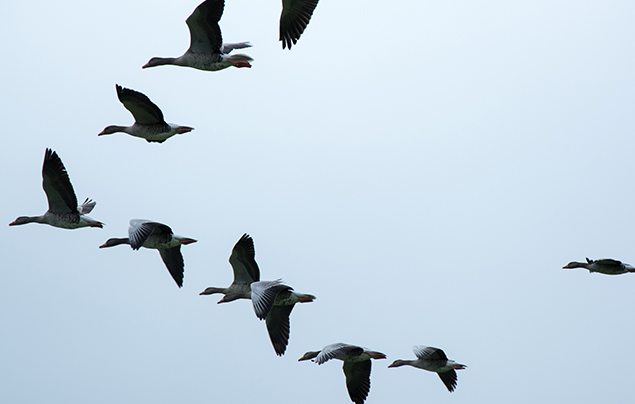
We’ve all heard the phrase “Birds of a Feather Flock Together” at some point in our lives. This phrase or idiom has different origin stories but was most notably coined before the 16th century. In 1545, William Turner wrote a satire titled “The Rescuing of Romish Fox” which had the first version of the popular phrase (phrase.org). The famed idiom usually has a negative connotation associated with it and means people who have the same characteristics usually are found hanging out together.
Though this is not always a negative statement, the phrase is mostly identified with people who can disrupt common aspects of life in the workplace, school, our families, or society as a whole. My previous Manager had our leadership team read “Taking Flight” by Merrick Rosenberg and Daniel Silvert which outlined different leadership styles and personality types.
These leadership styles were characterized by different species of birds. Though I failed at reading the book in its entirety, the main theme of the book always intrigued me which is the theory and acronym known as DISC (image from teambuilderplus.com).
More about Disc Training HERE
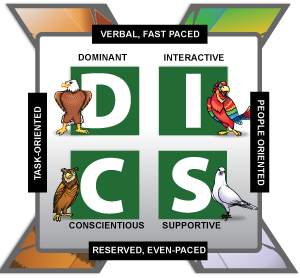
In the above image we see the meaning of each letter in DISC and which bird exemplifies each personality trait. Below is a closer look at each birds personality or character trait:
- Eagle- Dominant (assertive, task oriented, works better alone, expects quick results and knows the most effective route to take to meet/exceed goals, strong problem solvers).
- Parrot- Interactive (charisma, works better with others, takes initiative, looks for ways to motivate people, energetic with strong communication skills).
- Owl- Conscientious (observant, detail oriented, more reserved in how tasks are completed or providing feedback, focuses on different outcomes and best solutions, works better alone but can work well with people).
- Dove- Supportive (empathetic, looks for ways to build rapport, people oriented and driven, knows how to relate to people, knows how to motivate and encourage best performance, neutral in approach to conflict).
After training, I found myself on the IS side of the spectrum being steady/supportive and interactive. Basically I was/am considered a people person who’s empathetic, easily relatable, and thrives in a work environment where I directly interact with my team consistently.
On the flipside, while at home or outside of work, I’m more on the DC side of the spectrum being task oriented and dominant. Being the analytical thinker that I am, the outcome of the DISC training made me revaluate or reassess how I interacted with employees, family, friends, and colleagues inside and outside of the workplace. It also made me look at how to capitalize on both character traits to create better interactions.
The birds in “Taking Flight” helped me identify characteristics of people more effectively and how our like mindedness can be impacted by the changes we have in our lives and culture. The Eagle, Owl, Parrot, and Dove are all majestic birds in their own right. The Bible also uses birds to illustrate strengths and weaknesses of people identified in the many principles and precepts it holds. One of which points out the eagle as being a bird of strength during difficult times (Isaiah 40:31 MSG).
WHICH BIRD DO YOU RELATE TO THE MOST?
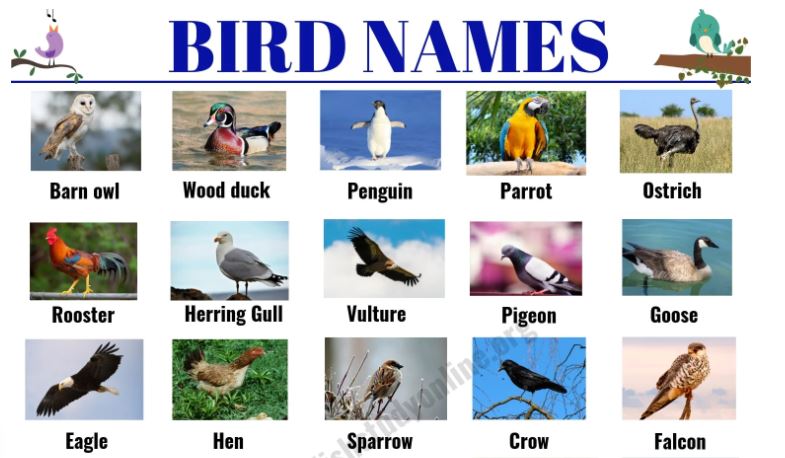
When it comes to leadership, I always aspired to be an eagle or a lion in terms of leadership styles. I believe I have some of their character traits but being a parrot or a dove was nowhere near the radar for me (being a lion or eagle seems much cooler). I was blown away by finding out I was more of an IS (influencer, supporter) than a DC (dominant, conscientious) personality in leadership.
But this self discovery was good for me and can be good for us as leaders to develop and grow in our leadership style. Trying to do something we’re not familiar with or adopting a personality trait that doesn’t come naturally, can hinder our impact as leaders overall (a dove trying to be an eagle for instance).
Yes we can learn from different leaders and craft our style from their characteristics; however, learning what leadership style is most advantageous for us, our team, and company, can help us consistently reach our personal, financial, and business goals.
A Parrot or a Dove can be just as effective as an Eagle or an Owl when it comes to positive leadership characteristics, strengths, and even weaknesses. Knowing our weaknesses can have a positive impact on our strengths if we continue to work on them. It’s all about finding what works best for us in terms of developing and motivating a successful team regarding cohesiveness and performance. Working with different leaders and teams can help us gain more perspective and add more tools to our leadership belt or repertoire.
Early in my career as an Assistant Program Manager, I had/have a good friend/colleague who I used to mimic when it came to her leadership style. I genuinely have a heart for people and want to see them succeed like she did/does but needed help growing in how to manage a successful team. I was like (and still am sometimes) the annoying little brother saying “oh I’m going to try that, that sounds good” or “you did this for your team, oh I’m going to do that too!”
You know, that annoying little brother that wants to take all your stuff and forgets to give it back. Yeah, that was me! I look up to her and just wanted to be as successful as she was, though she was more of the Eagle/Parrot type when it came to workplace leadership. As a Dove, I was still able to work with her and our leadership flock harmoniously. Don’t look down on your bird’s abilities, but utilize them to the fullness of your potential.
Our flock consisted of different birds who had different skillsets. We brought different point of views to the table. And though we didn’t always agree with everyone’s opinions or ideas, we still meshed well especially once we figured out the strong suit of our bird’s characteristics. We were able to capitalize on and strengthen our team because of it. Identifying what attributes our bird has, can help us maximize effectiveness while operating in those parameters.
Interacting with different leaders is a great way to develop and sharpen our leadership skills as well. It can help us further identify what characteristics we have and need to build upon. Iron sharpens Iron (Proverbs 27:17) There can be negative flocks as well. This can be found in toxic work environments among leaders and associates. We don’t have to feed into the negativity that’s easily gravitated to in the workplace, school, or in life in general.
Rather, we can stand out of the norm/flock and be the positive voice/reinforcement people need to find their wings and soar! We don’t want to put our employees in a box and stifle the creativity that comes with the characteristics of their “bird.” Rather, we want to make sure they understand their value and prepare them to be as successful as possible before they leave the nest. Regardless of Our Wingspan or Flight Speed Now, Keep Flying High and Don’t Quit. We’ll reach our destination in due time.



 Not Your Average Boss