


I recently read a post on LinkedIn about a new trend called “Quiet Quitting” and immediately looked for the article to expound on the concept. When I first saw the term, I took it literal and was like, “ok, people are quietly quitting their jobs without making a scene, that’s cool.” But after reading the post and article further, the meaning is a bit more nuanced than that.
According to the npr.org article, quiet quitting is doing the base or bare minimum of job duties or tasks but not going beyond that. This is to avoid burnout, to help maintain a healthy work-life balance, and avoid doing more work than you’re compensated for. It doesn’t mean performing below job duties or expectations though.
The trend started to pick up steam recently from a viral TikTok video on quiet quitting by @zaidleppelin. The #quietquitting garnered more than 8 million views since the initial video was posted in July. Seems like a lot of people can relate. Here’s the video by @zaidleppelin regarding quiet quitting.
Not subscribing to the “hustling and bustle” culture of most organizations in the workforce, is another aspect of quiet quitting. Are they not subscribed because they don’t like the job or organization? Are they burnt-out doing more than they’re getting paid for? Or do they just believe that doing enough, is enough. Having the answers can determine how well we interact and motivate our employees. Below is a look at the signs of burnout and ways we can combat it.
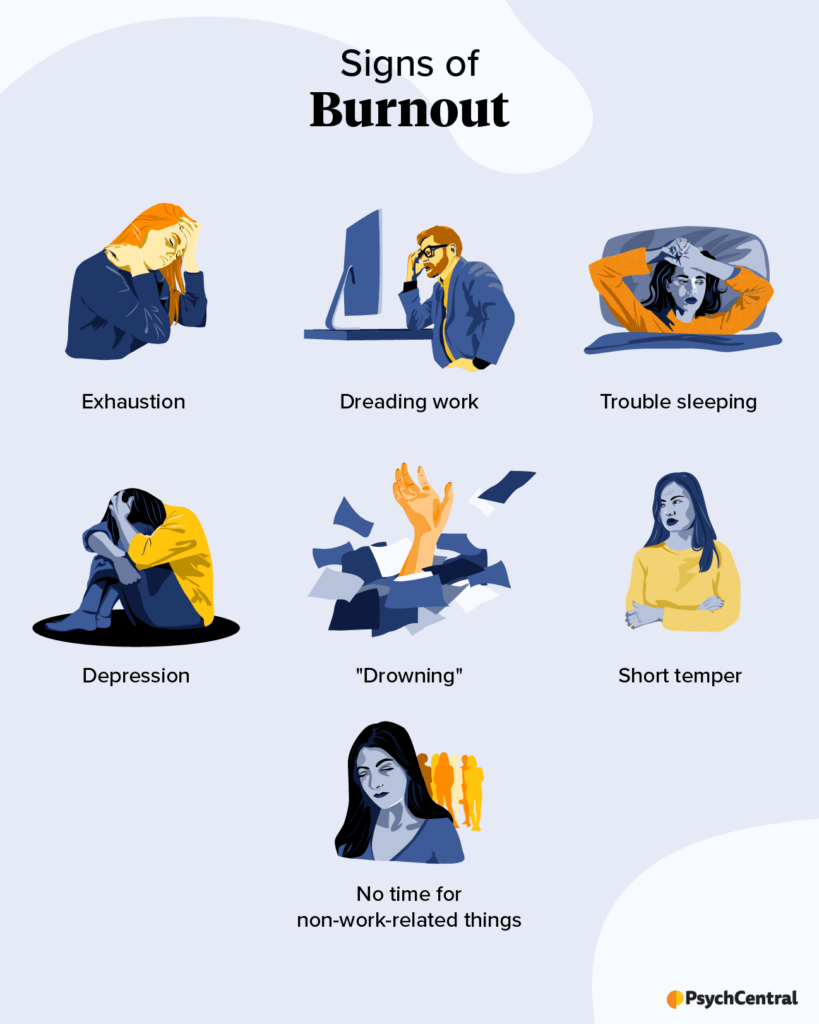
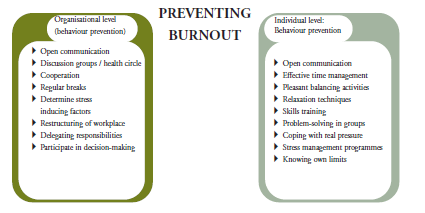
It’s important to identify the early signs of burnout to better cultivate a work culture and environment to help employees through it. Reflecting on my work experience (military, entry level, management) the common denominator was going above and beyond my job duties to get promoted. This was how I was raised and how I was trained by the leaders I looked up to. My truth and paradigm of the workforce was based on what my mentors and leaders exemplified; hard work, pays off! Being in the military further shaped my mindset on making sacrifices, self-discipline, and going above the call of duty to advance my career.
Even when I was experiencing burnout, I pushed through the physical and emotional stress to ensure I completed my work. There were also times when I just did my job and went home, and felt good about it, even as a leader. As a leader who typically worked 60 to 70 hours a week, when I was able to get my work done within 40 hours or so, it gave me a sense of accomplishment and relief.
Meeting expectations is a good place to be and doesn’t necessarily mean average. Rather it means we’re doing everything we need for our department and company to be successful. I still believe that hard work pays off, but realizing that not everyone thinks that way, or people can still work hard doing basic job duties is beneficial to our leadership approach and productivity.
Being a proponent of challenging ourselves to exceed expectations and goals set by the company, it’s important to pace ourselves so we won’t be overwhelmed. Understanding where employees are with work aspirations and motivation can help us maximize their effectiveness in the workplace. Our business model and structure may also need a revamp or overhaul if employees who used to go above and beyond stop and now do the bare minimum.
We know the job is the job, but there are some duties that are added later that employees aren’t being paid for. This can cause a rift between workers and management and can impact performance. Added responsibilities should come with added benefits, if not pay, then opportunities to advance or be a part of a specialized team. Being transparent about adding job duties at some point is another approach that can better prepare employees.
Learning more about this subject was eye-opening and really hit home. I left my career as a manager over a year ago to pursue my passions and spend more time with family. I got to a place where I didn’t want to work the job anymore as it took up a lot of my time off the clock. The stress wasn’t worth it anymore and though it was bitter sweet, due to the great people I met over the years, I had to do what was best for my overall health and my family.
My priorities changed. I wasn’t as invested in the job as I was when I initially started. Being salary and working more than 40 hours a week, came with the territory. I was ok with that, at first. As time went on, I found myself becoming overwhelmed, overworked, and burnt out often. I didn’t really take time off which was a personal choice but a choice influenced by job demands.
That was the culture. The nature of the beast, but did it really need to be that way? I ask myself that question sometimes as I reflect on that chapter of my life. Now that I can create my own schedule and work at my own pace, I see the value of doing just enough, and leaving the rest for another day. But not every employee wants the pressure or responsibility of being in charge, and that’s ok. Most employees want to do what they signed up for. Let’s hone in and build on that. With everything going on in the world and in our society today, people are looking for ways to find normalcy, contentment, and a healthy work-life balance more consistently.
The Great Resignation where the workforce saw over 70 million people leave their jobs from April 2021 to April 2022, was a sign of that. Another 4 million employees left their jobs this June (techtarget.com) Are we in for another round of The Great Resignation? If so, how are companies managing the fallout? As leaders, it’s important to know where our employees are regarding their goals, job competency, and feedback concerning our department. This can help with getting ahead of the curve when it comes to turnover, employee engagement, and employee satisfaction.
We know we can’t please everyone all the time, but we can try to create a business structure, procedures, and protocols, that allow employees on every level to effectively do their jobs consistently. When change does happen, communicating and getting feedback immediately is crucial to morale and proficiency in our organization.
Some employees just want to do their job and go home. That should be ok, right? However, some leaders can put pressure and/or demands on employees to exceed expectations without taking how they feel into consideration, or compensating them accordingly. The Equity Theory delves into that more, details here. This can create a false narrative that those employees don’t want to excel or aren’t good workers.
It can also make employees who just want to do their jobs, feel unappreciated or less favored than employees who go above and beyond. We want to find out what motivates or engages our employees through feedback, coaching sessions, and department surveys. If attrition is high, we need to look at the root cause and implement feasible changes as soon as possible.
Should we look down on employees who only want to do their basic job duties? The answer should be a resounding NO! But that doesn’t seem to be the case at times when I look back on my work and leadership experience. I’ve been guilty of putting pressure on my employees to perform above and beyond or at a high level consistently without getting their feedback. I told myself this approach was effective and the best way to influence them to realize their full potential.
I wanted the best for my teams and pushed them to advance in the company according to their goals stated in our initial meet and greet. My mindset was “this is what it took for me to get a leadership position, so they’ll have to work just as hard.” However, that may not always be the case and aspirations do change. I learned that the hard way after receiving feedback that wasn’t favorable.
We have to know when our employees goals have changed and tailor our leadership approach accordingly. Touch point meetings and checking in about their goals and what we can do to help, is a good place to start. But once goals are revealed and established, allowing our employees to come to us when they’re ready, is also a good approach to effective coaching/leadership.
Our perspective on work and work ethic is strongly influenced by our upbringing, culture, and generational box we’ve become accustomed to. We can turn up our noses or act like we’re better than other generations based on our drive and accomplishments subconsciously. We can also have preconceived notions about different generations based on expert opinions or speculation. “Those Gen Z’s or Zoomers are slackers coming up with new ways to get out of work” or “Those Gen Xers think they know everything and are hard to get a long with” (I’m a millennial or Gen Y, there’s nothing wrong with us, just kidding).
Whether quiet quitting is a new trend, generational mindset or something we’ve been doing for awhile under a different name, learning how to adapt as leaders is pivotal to our success and the success of our organization. So how do we think outside the primordial box that’s shaped our generation, behaviors, and work habits? One way is to look at the strengths of each generation impacting our workforce as well as being open to understanding their perspective. Here’s a look at 7 generations, however, we’re going to focus on the 4 that currently make up the majority of our workforce (Baby Boomers, Gen X, Gen Y, and Gen Z).
Information provided by theactiveage.com
- The Greatest Generation (born 1901–1927)
- The Silent Generation (born 1928–1945)
- Baby Boomers (born 1946–1964)
- Generation X (born 1965–1980)
- Generation Y Millennials (born 1981–1995)
- Generation Z (born 1996–2010)
- Generation Alpha (born 2011–2025)
Knowing our team members strengths, what motivates them, and how they view the workforce, can help us create coaching/productivity plans that are most effective. Learning the characteristics of each generation and how they operate, can also help leaders identify the best approach when it comes to interconnectedness, team building, and overcoming differences. Here’s a closer look at the 4 generations:
Charts from getapp.com
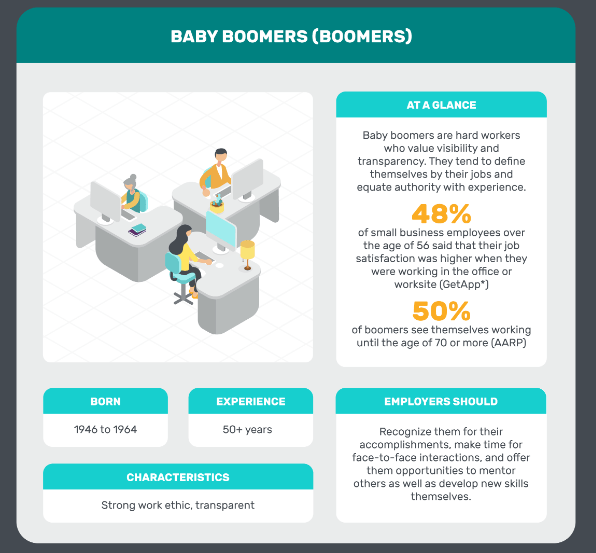
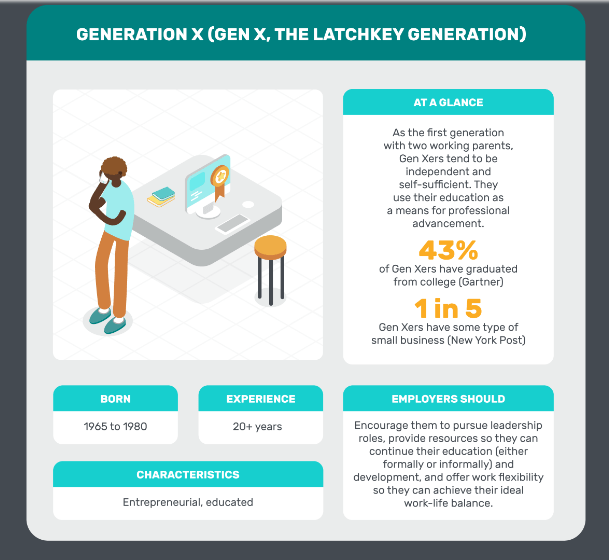
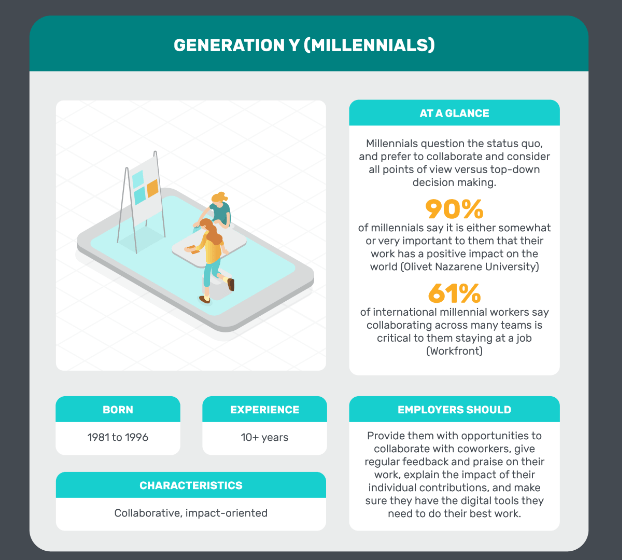
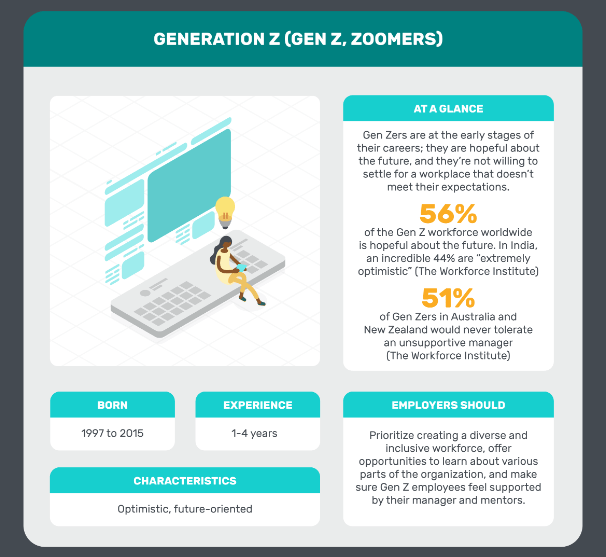
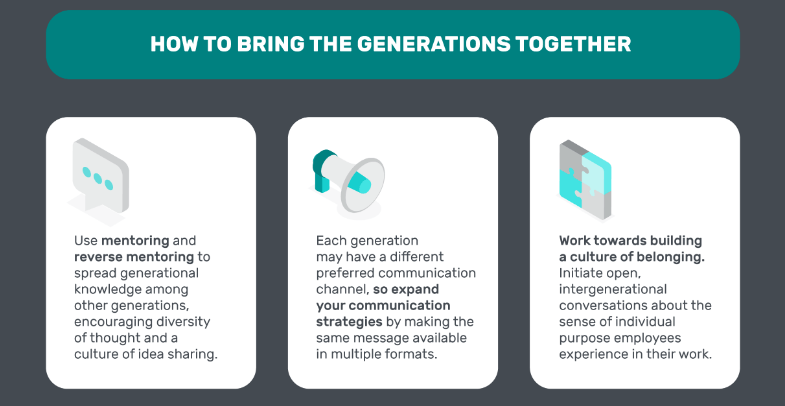
Can you relate to these charts? I was thinking wow, getapp.com really knows my life. But this data has been compiled from trends seen over the years and employees in the workplace. Having an idea of how these generations work including our own, can help us think outside our respective boxes and appreciate what others have to offer.
Decentralization and incorporating everyone on your team regarding changes, opportunities, meetings, client expectations, and implementing new ideas, is important to making everyone feel a part of the team. Whether an employee is “quiet quitting” or going above and beyond expectations, we want to make sure we have a plan that engages both types of workers. Let me know in the comments your thoughts on “quiet quitting” and why you think it’s occurring more frequently. Thanks for reading!
Listen to Podcast Episode Below!


 Not Your Average Boss